STATUS: INACTIVE // READ-ONLY

Blog

  • Sitting With Discomfort

    The mind has a funny way of pulling our attention away from what’s most important.

    If our piano playing is going great, it might say “practicing is so much fun” or “I’m so glad I can play this well.” When that happens, it’s normal to want to continue doing what we’re doing.

    On the other hand, if our piano playing is not so great, it might say “this is so boring”, or “that didn’t come out right…I need to do something differently.” Now, when this happens, we might be tempted to change what we’re doing.

    If our goal is to improve our playing, we need to fix what we’re doing badly. But, if the mind is saying “change what you’re doing!”, there’s a conflict.

    That’s because you can’t fix a problem if you’re not willing to sit with the problem. If you change the subject every time the problem shows up, you will learn nothing about the problem. However, if you can sit with it, you might be amazed at what reveals itself.

    This is the highest leverage point you have in your practicing:

    Sitting with discomfort.
  • Stop Trying to Play Better

    It is not your responsibility to play better. If you knew how to do that, you would be doing it already. Are you not already doing the best you can do? Why do you expect more?

    So, what’s the alternative to this mindset?

    The way you play is a direct result of how you practice. Nothing else.

    The only thing you should be concerning yourself with is your practicing.

    If you want different results, the only thing you need to do is change how you practice. Now, there is no way to guarantee any specific results, especially if you’re asking for a big change.

    But, you can never get more out than you put in.

    • Do you know what results you’re getting?
    • Do you know what results you’re trying to get?
    • Do you know if you’re practicing correctly?
    • Do you even have a specific way of practicing? (I mean really specific, concrete exercises!)

    Or, is your practice time only spent on “trying to play it better”?

  • Is My Piano Playing Good or Bad?

    “Is my piano playing good or bad?”

    If you’re asking this question, you should already know the answer to it. You are the one playing, not me.

    Do you like the results you’re getting? If so, what more do you want? If not, great. Now you have an opportunity to improve something.

    Stop asking other people to evaluate your playing. They can’t possibly know the answer better than you do.

    “How do I improve my playing?”

    This is a better question, but you might not like the answer:

    Practice in such a way that your playing becomes better.

    Do you have a specific, clear way of practicing that is taking you where you want to go? Most pianists don’t.

    And yet, that is the only thing that matters, and the only thing that you should be evaluating.


  • A New Way of Looking at Piano Practice

    A pianist posted a video in an online forum, along with the question “Am I doing this right?”

    I spent a few minutes trying to decipher the motivations behind this post. I began suspecting that this pianist did not look at the world the same way I did.

    But, I can’t blame them. After all, the traditional way of thinking about piano practice encourages that worldview.

    The traditional way of thinking about piano practice goes something like this:

    • The score tells you the right way of playing.
    • There are “right techniques” and “wrong techniques.”
    • The teacher tells you if your technique is “right” or “wrong.”
    • The teacher tells you if your playing is “good” or “bad.”
    • Practicing means learning the right technique and doing it over and over.

    In contrast, here’s a different way of thinking about piano practice:

    • The score tells you how the composer thought the piece should sound, as much as music notation can.
    • The “right technique” is whatever works to play the piece.
    • Your personal experience will teach you if your technique is “right” or “wrong.” A teacher can only point you in the direction of having new experiences.
    • Practicing means doing exercises that challenge you to have new experiences.
    • Your playing is “good” if it helps you achieve what you’re trying to achieve, and “bad” otherwise. A teacher can’t possibly know this better than you do.
  • Why piano technique is a waste of time

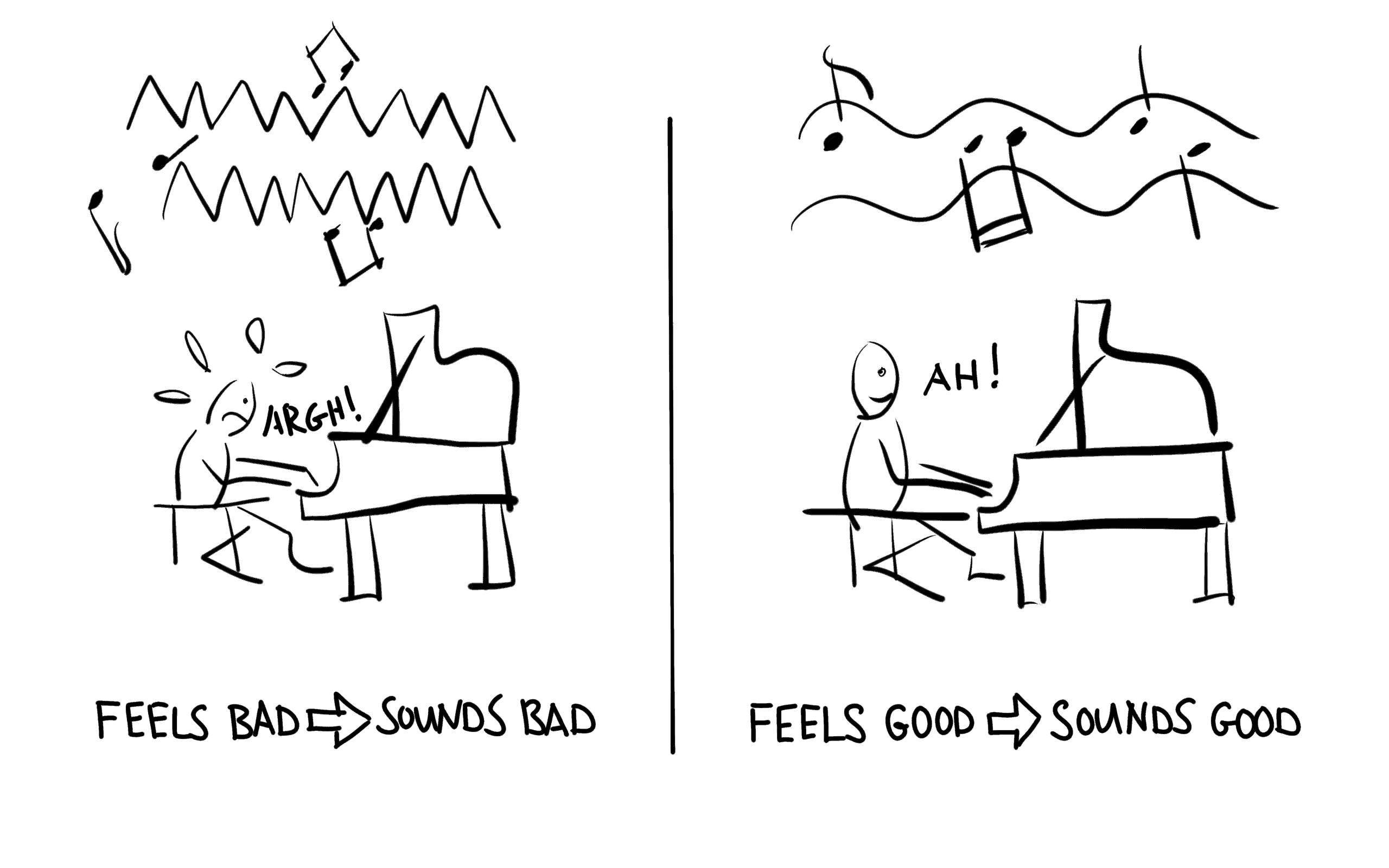
    At the end of the day, the music you are playing either sounds good, or doesn’t sound good.

    Music sounds good because you are in the zone when you play. Your technique works naturally, and there is a flow to the whole thing.

    If none of that is present, the music will not sound good. It doesn’t matter how “correctly” you are playing.

    Throughout my life, I’ve learned so many things from books. When I saw that people wrote books about piano technique, I thought this was the solution to all my problems.

    I figured all I needed to do was read those books, practice what they described, and then I’d be all set.

    It didn’t quite work out that way.

    I soon realized that “knowing” a lot about piano technique was only a tiny piece of the picture. If this knowledge isn’t integrated, it is next to useless.

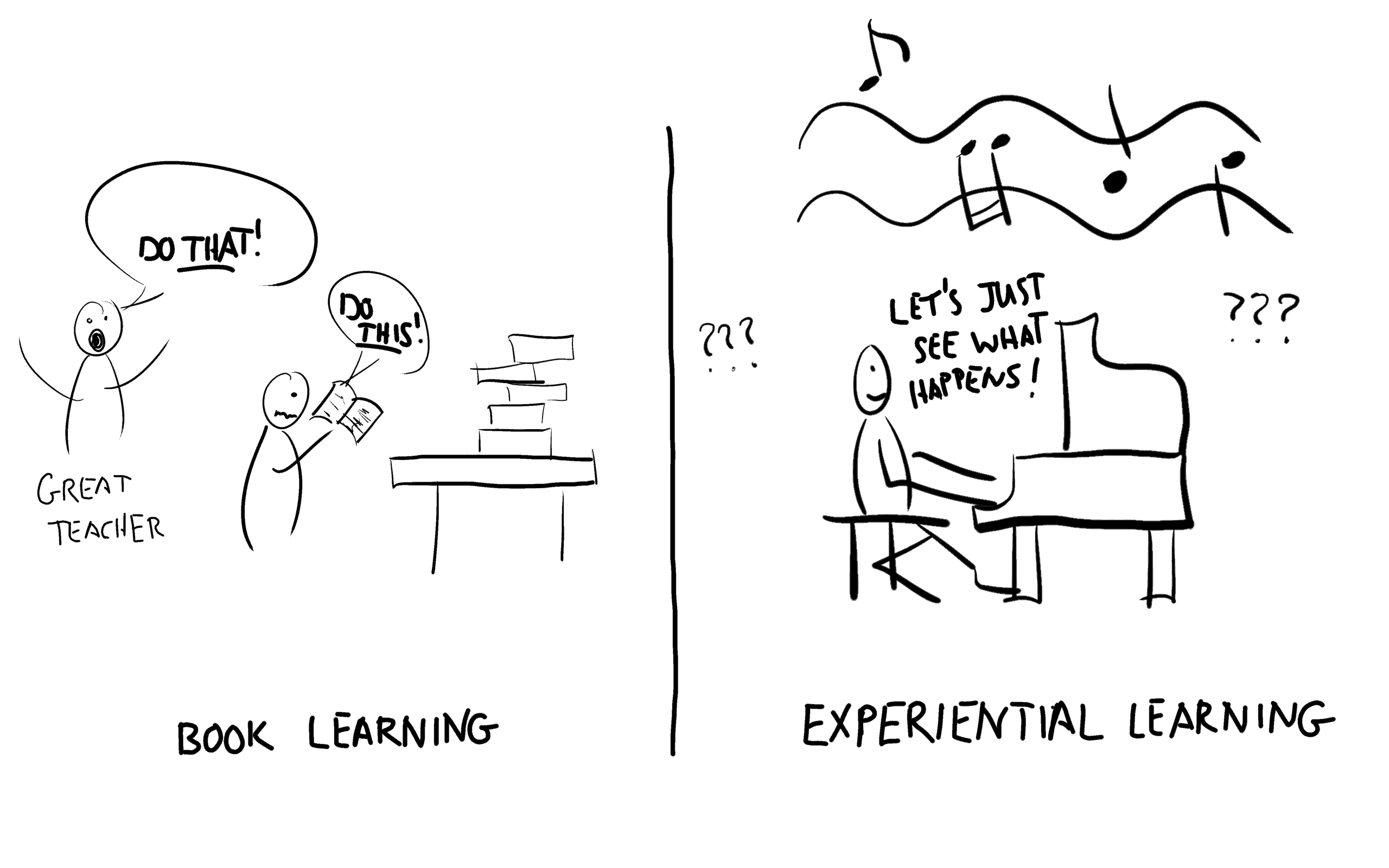
    And here’s the thing: Book learning cannot help you integrate your piano technique. You need experiential learning.

    For example, suppose you’re practicing a technical exercise. You can’t always be reevaluating whether it’s the right exercise, or if you’re doing it right. You have to just do it, and experience what that feels like. 

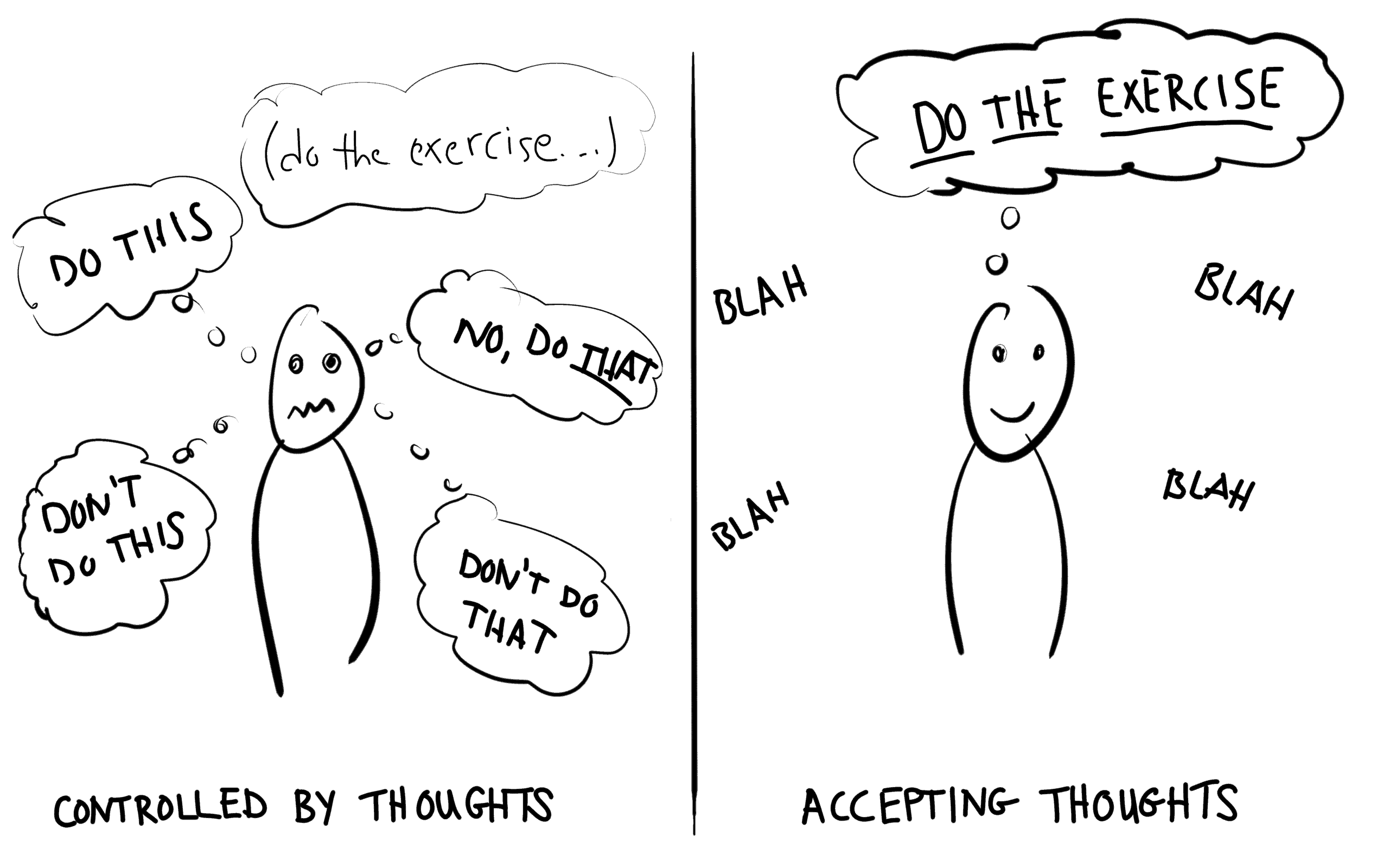
    This was a huge problem for me. I knew that I spent so much of my time overthinking and overanalyzing. At least, that’s what I was told. By many, many people…

    And yet, I couldn’t stop. My mind just did what it wanted to do, no matter how hard I tried to keep it in line.

    I wanted music to be easy. But, it wasn’t.

    What I didn’t realize at the time was that I was making my life difficult. Rather than beating myself up about overthinking, it’s possible to accept that thinking. Once that’s done, I can just get on with life.

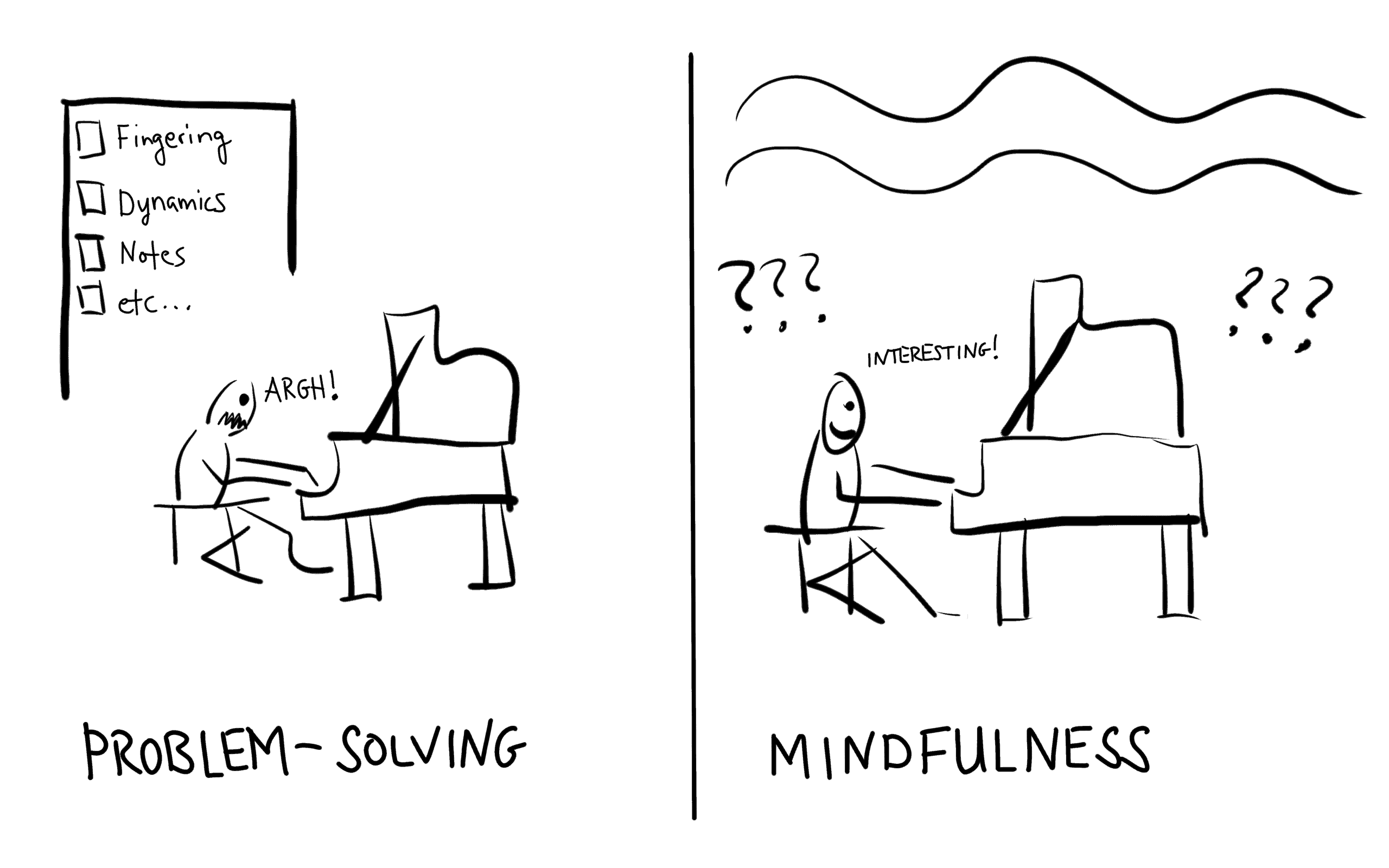
    This requires a radical shift in how you approach music, though. Instead of trying to solve problems, you need to care about whatever is happening in the moment.

    This is called mindfulness.

  • Enjoy the Process and Make Progress

    Enjoy the Process and Make Progress

    I hear this kind of question a lot: “As a musician, while practicing, how do I both enjoy the process and also ensure that I’m making progress?”

    It may seem like there’s a contradiction between those two, but to make progress, you do need to enjoy the process.

    In this article (and video), I give 4 reasons why you’re not getting as much satisfaction as you should be from practicing.

    1. Pay attention

    If you want to enjoy the process, you have to be paying attention to what you’re doing.

    A lot is going on while you’re practicing. For example, you might notice:

    • Physical sensations
    • The sound of the music
    • Thoughts
    • Feelings
    • Urges

    For instance, you might hear something which causes you to feel something, and then you have an urge to respond in a certain way. It’s all a very complex picture.

    Now, if you’re paying attention to what’s happening, there’s absolutely no way you can’t be enjoying it on some level. This is because you can’t be bored while you’re paying attention to what’s happening.

    Tips for paying attention:

    Whenever you find yourself getting bored or frustrated, try to notice as much as you can about what’s happening in the present moment. The idea is not to get rid of the boredom or frustration. Instead, the idea is to get to know it better. 

    2. Listen to yourself

    If you want to enjoy what you’re doing you have to listen to yourself.  Now, I don’t mean listen to the sound that comes out of the instrument. Instead, I mean you have to listen to what’s going on inside of you.

    Do you want to be doing this?

    Is this your idea to be practicing?

    Is this your idea to be studying this instrument? 

    If the answer to any of these questions is “no”, how can you possibly think that you’re going to be enjoying it?

    This is hard to do, by the way. Our culture teaches us that we’re supposed to be doing lots of things that we have no interest in doing, and we’re just supposed to deal with it. However, that cannot work. You must pay attention to what you want.

    Tips for listening to yourself:

    Ask yourself: if I had a magic wand that could give me absolutely anything, what would I ask for?

    Notice what your mind tells you in response to this question. It is valuable information. 

    3. Enjoy your mistakes

    If you want to enjoy what you’re doing, and especially if what you’re doing is practicing a skill, you’re going to make mistakes. This means you need to learn to enjoy those mistakes.

    This is what it means to practice. So, there’s no possible way you can enjoy practicing if you don’t enjoy making mistakes. And, if you don’t enjoy practicing, you will not learn.

    Of course, in terms of the end product, we don’t want mistakes all over the place. But, you know you can’t get there by not making mistakes. So, if your way of practicing is to avoid mistakes at all costs, that perfect end product will never get off the ground. Or if it does, it’s going to be painful.

    You must find a way to enjoy practicing. And, this is possible. 

    Tips for enjoying your mistakes:

    Check out my course, where I teach you how to pay attention to mistakes, and what happens during mistakes so that you can find a way to get more in touch with that process and find a way to make it more meaningful to you. This will help you stay focused and balanced, and help you learn something from your mistakes, rather than spending all your energy trying to eliminate them.

    4. Take risks

    To enjoy the process, you have to be open to taking risks, and you have to do it gladly. If there’s no risk, there is no possibility for any reward, so take risks.

    When you have a feeling of excitement or possibility, like “maybe this will work (or maybe it won’t)”, try it. Yes, there may be a failure. Something might go horribly wrong, but that’s the game that we’re in here. So, take risks. Get used to that feeling of excitement, because that is the difference between enjoying what you’re doing and the whole thing feeling like a total drag.

    Tips for taking risks:

    Notice what you are afraid to do. You don’t have to do those things. But, notice the fear, and try to imagine yourself doing what you’re afraid to do.

    What would be different about your life if you didn’t have that fear? Even if it’s too scary to go all the way, is it possible to get just a little bit of that?

    Summary

    If you want to enjoy practicing a musical instrument, and enjoy developing that skill, keep these four principles in mind:


    1. Pay attention to what’s going on.
    2. Listen to yourself (inside yourself, not not the sound that’s coming out of the instrument).
    3. Learn to enjoy your mistakes.
    4. Take risks

    If you try those four things you may find that your experience is going to be dramatically different, in terms of enjoying the journey.

    Leave a comment below and let me know how it goes for you!

>