Maybe you feel like playing is too difficult. What your teacher is asking you to do just doesn’t make sense. You might say “this is too hard!” or “I can’t get it” or “I’m just bad at this”. You may get angry with your teacher, and wonder “why are you making me do this!?”.
You can say something.
You have the right to ask the teacher for an explanation of how working on this piece fits the goals that you have for yourself.
Does it seem like your teacher is forcing you to play a piece you don’t like? Don’t just tolerate it. You have the right to talk to your teacher about your own goals.
I am not saying that you should refuse to play what the teacher assigns. The teacher, as an expert, is supposed to give you assignments that are in your best interest. Maybe that means you won’t like some of those pieces, but the teacher should be able to explain why they are being assigned.
If the teacher asks you to do something too hard, you have the right to ask: “How?”
You don’t have to struggle by yourself. Your teacher should offer a solution to any problem you face. Sometimes that solution might be a way to eliminate the problem entirely, and sometimes it might be a way to help you accept that you can’t eliminate the problem. But, it is your teacher’s responsibility to ask you for things that are right for you. If it’s really too hard, this is not your problem.
If you can’t get it, you have a right to wonder why.
If you are trying really hard to master something, and it’s not working, there is a reason. It may be a simple reason, or it may be a complex reason, but there is a reason. Part of the excitement of music study comes from figuring out these reasons. So explore them!
You have the right to ask the teacher why you aren’t getting the results you are expecting.
You might be frustrated with your playing. You might be frustrated with your hands, which aren’t doing what you tell them to do. You might be frustrated with your brain, which can’t read notes fast enough. Or, you might be frustrated with the piano, which isn’t making the sound you want. You can complain about all of this.
If it seems like you are just bad at this, you have a right to be given a path to improvement.
And that path should not be just “practice harder.” Your teacher should be able to suggest concrete exercises which target the specific issues you have. The path may not be so obvious to you, and there’s no guarantee how long it will take to reach any specific point, but the teacher should be able to chart a course for you.
You have the right to tell the teacher that you don’t feel at ease with the way you are sitting.
Perhaps it hurts to sit at the piano. Maybe you are trying to sit up straight, but it’s just too tiring.
Sitting should be reasonably comfortable. If it isn’t, it might be possible to change the way you are sitting. Don’t assume that you need to just deal with it.
You have the right to let your mind wander to whatever you find most exciting in the moment.
Maybe you are bored. You try focusing on what you are playing, but it’s just not happening. You don’t need to fight this. It’s how your mind works.
If you aren’t practicing enough, but still want to improve, you have a right to be taken seriously.
I assume you know that you can’t expect miraculous results without consistent practice. However, you should still expect some results even with minimal practice. If you practice for 5 minutes, you should get 5 minutes worth of results, which is still more than nothing!
If you want to practice more, but can’t seem to motivate yourself to do so, your teacher should be able to help you to either find a way to incorporate more practice into your life, or help to accept whatever amount of practice you are doing.
If you don’t want to practice more, and your teacher wants you to, you have the right to talk to your teacher about this, or look for a teacher whose goals for you are more in line with your own.
You can challenge yourself, too
This isn’t just your teacher’s problem.
If things hurt, If they are no fun, If you don’t understand, If they aren’t working…
…don’t just deal with it!
You have more power than you realize to get what you want.
Many musicians struggle with stage presence and feel a lack of confidence as a result. Fortunately, by practicing mindfulness, we can improve our stage presence, feel more confident, and play better.
In this article, I will give several tips for developing a confident stage presence.
1. Have a clear intention when performing music
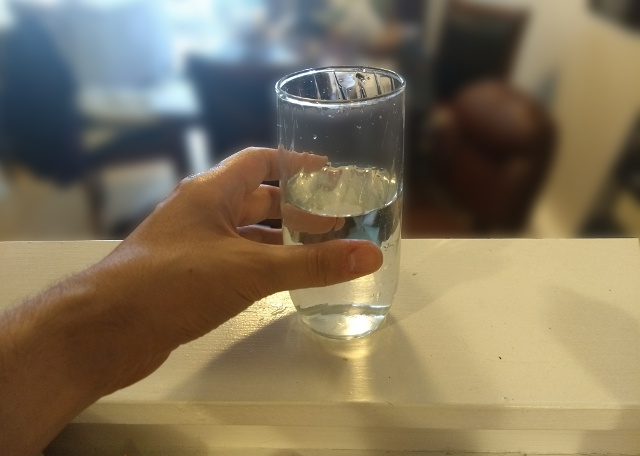
A confident musician has a very simple idea of what the performance of a piece is. Compare this to reaching out for a glass of water. If we analyze this movement to the greatest degree possible, we can easily become overwhelmed by detail. Which muscles are involved? To what extent do they need to contract and relax? Exactly how much force is required to pick up the glass? What direction do I need to move my arm in, relative to my torso? What angle should I hold my forearm at, to prevent the water from spilling?
This is way too much to think about. It is far more practical to have the intention of simply “picking up the glass”. If I organize my actions around this intention, then over time, I will figure out how to make everything work.
You may object “I don’t have a clear intention yet, because I don’t know the piece well enough yet.” It can be difficult to commit to an intention when you are still worried about concrete details which you know are wrong. Nonetheless, this is what you need to do. Choosing a clear intention will serve to focus your mind, and make it easier for you to observe cause and effect relationships between your actions and the results you get. This is key to improving your stage presence.
Practice tips:
When you practice, try setting clear intentions. For example, you might say “I will play from the beginning to the end of this piece, no matter what happens”.
2. Don’t correct yourself
Many musicians will play a wrong note, and then immediately correct it before going on. This is not confident playing.
It’s true that correcting your mistake brings attention to it, and that the audience is less likely to notice a mistake if you simply brush it off (especially if they are unfamiliar with the piece). This is not, however, the main reason I suggest avoiding corrections.
Corrections feed distraction.
They make it impossible to focus on the big picture, and encourage you to worry about details. They prevent you from entering a state of real connection to what you are doing, because your brain is constantly scanning for potential mistakes to correct. This is not the way to have a good stage presence.
Practice tips:
When you make a mistake during practicing, don’t stop. Instead, keep going, and decide to fix it later. If you practice this way, you will find it much easier to perform this way. This is one of the most important habits to develop if you want to know how to develop confidence as a musician.
You might think that if you don’t correct yourself, you will learn the piece wrong and will never be able to fix it. I am not arguing that you should turn a blind eye to mistakes. However, while you are playing, do not correct them.
3. Stop hesitating
Music has a beat. Don’t interrupt it.
You might think “if I don’t play carefully, I will make careless mistakes.” If so, consider that “playing carefully” is its own kind of mistake.
Notice how music can give you confidence.
Practice tips:
You can keep a steady beat even if you aren’t sure of the notes you are playing.
Don’t believe me? Try it. Find a piece that you don’t even know very well, turn on the metronome, and play from beginning to end. Allow yourself to play wrong notes. Work on this until you see clearly that there is no need to hesitate.
Record your “careful” playing, and listen to it. Can you hear how careful it is? How, exactly, does that carefulness come across in the sound? Is that the intention of the composer?
4. Never apologize
Developing this kind of confidence is one of the main benefits of learning a musical instrument. Certainly, low self-esteem and insecurity aren’t really supposed to be part of being a musician.
However, in lessons, when students make mistakes, they look sheepishly at the teacher. They have been trained to feel as if they have done something wrong, or that they are bad pianists/students/people as a result of it.
This is a distraction. You should be focusing on the music, and on your playing, not on the teacher, and not on your self-image. Notice how it affects your playing. This is always the key.
I don’t think anyone sincerely believes that you should apologize after making a mistake. No one would argue for that. Then, why does it happen?
Practice tips:
Remind yourself that whatever you do is right, because you did it. If you don’t like it, you can always do something different next time. But, own what you do right now.
5. Take your fears along with you
You might have a fear of performing music with confidence. Perhaps you think:
It will be a sign of arrogance.
I will be embarrassed if I play confidently and still screw up.
Others will be angry with me.
I haven’t yet earned the right to play with confidence when I still have so many mistakes in my playing.
I’m only a beginner.
These fears, if you succumb to them, will ruin your confidence and stage presence.
Practice tips:
Don’t try to argue with your mind. Instead, simply notice how all of this is affecting your playing. Allow the fear to exist.
Give it a try in the practice room. Try it in a lesson. Try it for 5 minutes at a time, and see what happens.
6. Don’t wait for it to be earned
A final concern I hear frequently is: “I can play confidently once I learn to play well, so I should work towards that first.”
The underlying idea is that confidence for performers is something that needs to be earned.
Many people reach high levels of achievement and do not feel confident. Sometimes, they have learned to perform quite well despite having no clue how to be a confident musician on stage. Sometimes, confidence surprisingly decreases as skill increases (you gain a better realization of how much you don’t know).
Try to maintain a beginner’s mind, and try to make friends with your incompetence. Musicians who have good stage presence are not trying to impress the audience with their expertise. Instead, they are present with themselves as they are.
It can be challenging to approach things this way because it is so different from the order society generally teaches us things must progress in. I find, however, that this will help you play better. You will be able to focus more on what you are doing, and less on yourself.
Is art about apologizing, or is it about expressing yourself?
Practice tips:
Every time you practice, try to become a beginner again. When you are practicing something that you aren’t very good at, this is precisely the time that you should try extra hard to be confident.
You can be a confident musician on stage
We think skill is necessary for confidence, and we think we need confidence to develop skill.
Making progress feels impossible.
We tend to think that the feeling must come before the playing. This is a result of the common experience of trying to play confidently and failing.
However, just because this is a common experience does not mean that it has to be this way.
Is “confidence” in music-making something that is inherent in the performance, or is it more about the one doing the playing? If we don’t understand the difference, it is very easy to say “I can’t possibly play confidently, because I’m not confident.”
Your turn
Do you find this inspiring or motivating? Is there anything I’m leaving off this list? Take a look at your own experience and see what it tells you. Also, get out there and practice mastering your confident stage presence! Leave a comment and let me know how it goes.
It’s no fun playing the piano when you don’t feel at ease. Many of us are told to relax by teachers who can see how much of a toll the stress is taking on our playing. This may lead us to ask “how do I relax while playing?” or perhaps “will relaxing actually help me?”
Before trying to figure out how to relax, I would first ask the following question: “What are you trying to accomplish by relaxing?” Maybe you want to play better. Maybe you want to feel better while you play. Both of these are understandbly desirable.
I ask the question because I believe it is important to understand that “relaxation” is probably not your final, ultimate goal, but rather a means to an end. Is relaxation a worthy means to achieving a particular end? I would say it depends. You need to use your own experience as a guide here. “Relaxation” is just a word. What is more interesting to me is what happens when you try to relax.
Some common concerns
“I want to relax because it will help me play better.”
My suggestion is to:
Have a clear idea of what you are trying to accomplish.
Have a clear idea of what will accomplish it.
Learn how to focus and concentrate on that.
Can you do these 3 things? Is anything else required? Perhaps “relaxation” is necessary in order to achieve them, or perhaps it isn’t. But, if you keep coming back to this list, you might have a better chance of staying on track.
“I have no idea how to avoid tensing up. It happens so suddenly that I can’t stop it.” Or, “The pain starts immediately after I begin playing.”
It can be extremely difficult to identify long-standing habits. Often, we are so used to them, and they are so much a part of us, that we just can’t imagine how we could possibly do anything differently.
You should keep in mind that if the pain appears immediately after you start playing, it is caused by something you are doing.
Does that mean your playing is causing it? Not necessarily. Perhaps you only notice it when you start playing. Or, maybe it is your playing itself. I have no idea. But, you are the one who is in a position to investigate this.
Make an exercise out of it. Take a few minutes to observe what happens as you start playing.
When does this shift happen?
How long does it take?
Is it an abrupt change, or does it have a soft border?
Is there any place you feel your attention being drawn to?
What physical sensations do you notice, throughout your whole body?
To do this kind of work, you must (at least temporarily) set aside the idea that you are going to fix this right now. We need to get more info first.
“The music I’m playing is just tense music. There’s no way I can relax.”
When we listen to music, it can be remarkable how much of an effect it has on us. When we play music, this effect can be even more pronounced. Most people who have learned a musical instrument can attest to how remarkable it is that a piece which promoted so much tranquility and ease suddenly makes us want to rip our hair out in frustration as we learn to play it.
So, I offer the following challenges:
Listen to some emotionally evocative music and try to remain unaffected by it: Try to hear the music as sound, not music. How many notes can you hear? How many instruments? Can you hear harmonics? Sound effects such as breathing, hands thumping against the keys, distortions in the recording?
Listen to some really boring music and try to make yourself react to it strongly: Notice what comes up in your mind as you listen, even if it is seemingly unrelated to the music. Let yourself go with it.
Play a very difficult piece and refuse to struggle with it: What would this take? What would you have to give up in order to let go of the need to play it well?
Play an easy piece and struggle with it: If your playing is easy and comfortable, raise your standards. Demand as much perfection as you possibly can, until you start struggling. If you can play perfectly by yourself, try in front of an audience. If you can play in tempo, trying increasing the tempo by 50%. If you can play while looking at the music, close the book and try again.
The point of these exercises is to learn to understand that your emotions are not due to the music, but rather due to the ways that you are interacting with the music. You can learn to do things differently, if you want to. You need to be the one to decide which way is most useful for you. But, don’t blame the music!
“Pianists who look tense clearly play with a harsh sound. So, it’s obvious that relaxation is better.”
Is the goal to satisfy your own (or someone else’s) subjective opinion of sound? Or, is it to achieve control over your playing, so that you can achieve whatever you set your mind to?
Also, looks can be deceiving. It can be quite difficult to understand someone’s internal state simply by observing their playing.
“I can relax when I play slowly but not when I play fast.”
You are probably doing something very different when you change tempo. Fast playing is not inherently more tension-producing than slow playing. Why is faster playing provoking you more? Are you trying harder to do something when you play faster? Is it possible that your concept of the piece at a fast tempo is just too complicated? Explore this.
You can force relaxation, if you want to…
Do you know the different between being relaxed and being tense? If so, why can’t you just…do it?
Is it not just a matter of setting priorities? For instance, you could decide to simply not play at all. Would this be relaxed enough for you? Or, instead of trying to play every single note, you could just focus on keeping a steady beat. Could you manage this in a relaxed manner? You know, like tapping your foot to the radio…
Of course, that is not what you are looking for. You want a way to play both relaxed and also correctly, right? That is completely understandable. I wish I had a magic bullet for this, but I don’t. I urge you to consider the possibility that you just don’t know how to play the correct notes in a way that works technically.
I don’t say this to discourage you. There can be something empowering in the realization that you just can’t figure out, that you are out of ideas. Sometimes, it is only when we reach the bottom of the barrel that we are willing to try something new, and often, trying something new is what leads to real progress.
“In the beginner’s mind there are many possibilities, but in the expert’s there are few.” – Shunryu Suzuki
When I play the piano, I strive to make it feel good. It is no fun for me to feel like I am struggling with my body while trying to play, and the music that results from that struggle is not something I would enjoy listening to.
I want to be clear that I am not suggesting that playing which feels good is automatically correct, or that making sure you are feeling good will somehow lead you to better playing. The point is to learn to pay attention to feelings, which is a useful skill for at least a few reasons:
Feeling good has practical benefits: All else being equal, we want to be in a state where things feel better. When we are not in pain, and not stressed out, we are better able to pay attention, better able to learn, and more likely to be motivated to practice. This does not mean that the good feelings are what lead to improvement, but rather that they are a useful prerequisite for what does lead to improvement.
Feelings point us to what we might be ignoring: Our senses provide us with valuable information which we need in order to learn. The more we pay attention to all of the varied aspects of our playing (how it feels, how it sounds, how it looks, etc.), the better we learn to discriminate between subtle differences. You want to notice what is actually happening, not just what you think should be happening.
Properly calibrated feelings are a useful guide: In the long run, we actually do want good feelings to teach us what to do. We want the right way to simply “feel right”. So, if we can sense pain and tension as we are playing, and learn to notice the difference between how things feel when they are “correct” and when they are “incorrect”, we can find ways of playing which are both correct and which feel good, as the feelings themselves will reward us for playing correctly. Over time, this will train our intuition, and we will naturally gravitate toward playing correctly and easily.
To sum up: Learn the difference between what feels good and what feels bad.
So, is tension good or bad?
There is definitely a danger in believing that playing should always feel good. I discussed some common beliefs about tension in a previous article. To expand on that, let’s look at a few reasons why tension may not always be the evil monster it’s made out to be:
Increased awareness leads to more discomfort: As you develop more awareness, things which used to feel good or neutral may start to feel bad. This doesn’t even necessarily mean you are doing anything different, only that you are noticing feelings you never noticed before. It is a sign of progress, but it can lead you to believe that you are doing the wrong thing, and you may even abandon whatever approach led you to this awareness, which is exactly the wrong thing to do.
Growth requires leaving your comfort zone: If you assume that bad feelings mean you are going in the wrong direction, you may avoid territory which you need to confront in order to progress. In order to learn, you have to go outside of your comfort zone. Often, because we feel anxious or uncertain about our playing, we may tense up. If we don’t realize the psychological origin of the tension, we may end up blaming our technique.
You might be jumping to conclusions: You may not be correct as to the cause of the feelings. This can cause you to change your approach prematurely. For example, you may believe that tension is caused by the way you are sitting, when actually it is caused by the fact that you aren’t feeling a steady beat as you play.
In this light, I would say it is often best to observe tension without trying to eliminate it, at least until you have a clear idea of what will actually eliminate it.
Is pain always a sign of injury or potential injury?
(Disclaimer: I am not a medical professional, so the following should not be understood as medical advice.)
My guess is that yes, pain probably means you are doing something wrong, which will probably lead to negative consequences down the road, if you keep doing it.
However, I also believe that pain at the piano is rarely an emergency. If you feel pain, what are you going to do about it? You may ask a teacher what to do, but what if the teacher can’t give you an answer which allows you to play without pain?
If you feel pain, do not try to push through it. There is no sense in that. Instead, bring an attitude of curiosity to it, without trying to make it go away, and see how many different aspects of it you can observe.
When does it happen? When doesn’t it happen?
Where do I feel it? Where don’t I feel it?
What else do I feel along with the pain?
Is it constant, or does it come and go?
Does it have a shape? A texture?
The point is not to arrive at “correct” answers to these questions. You may not know the answers, or the answers may seem to change. The point is to ask the questions, because they will get you to pay attention to what’s actually going on, and in the process you may learn something.
If you feel pressure to perform well (for a competition, audition, etc.), this will almost certainly interfere with your attempts to practice awareness. If you can’t look at your pain with an attitude of open curiosity, you should probably back off.
When your piano playing doesn’t sound right, ask yourself: “have I analyzed the music?” Music analysis is the process of coming to understand the music. This may include a formal musical analysis, such as with Roman numerals or a Schenker graph. However, it may also include simple, common-sense answers to the basic question “what features do I notice in this piece?”
In this article, I will explain why you should analyze music, and give you some practical suggestions for how to analyze music.
What is analysis?
Music analysis serves at least two purposes:
To understand what the composer wrote.
To understand what the piece means to you.
In my opinion, Purpose 1 is not about morality. As far as I am concerned, you are under no obligation to care about what the composer wrote. However, it may be of use, as it can help you understand the work as a whole.
Regarding Purpose 2, I generally try to follow a rule: “If it doesn’t mean anything to me, it’s not real.” If there is something in the score, I do not take it seriously until I can convince myself that it really should be there. Otherwise, I try to ignore it. There is no sense in insisting I play a passage forte if I don’t see what is motivating that forte. Otherwise, what will move me to play loudly?
How is analysis different from performing?
Performing, in contrast to analysis, is not about understanding, but rather about doing.
I want to make a few points about performance.
Performance is always “correct.”
Your performance is always a correct rendition of your analysis, in the sense that you are always playing the piece as you see it in the moment that you are playing.
This is not just a philosophical point. You don’t need to play the analysis. You only need to perceive the features of the music, and then play the music, not the analysis.
Before you perform, talk through the analysis if you want, but don’t try to play the analysis. If your analysis isn’t right, change it. If you can’t play the analysis you have written down on paper, the problem is with your focus or with your technique, not with your performance. This attitude will free you from trying to control things over which you have no control during a performance, and it will make it much easier to let go of past performances that did not go well.
Performance requires mindfulness.
It does not matter how well you “know” the music, or how well you “can play”. What matters most is how present you are. This can vary day-to-day. Many problems which appear to be problems with understanding of the music, or with technical ability, could be better understood as problems of distraction or of lack of commitment to doing one thing at a time. That does not mean they are trivial; these problems are just as difficult to solve as are more conventional musical issues.
Performance requires acceptance.
Just because a performance is always perfect does not mean you will always feel great about it. You will make mistakes. You will be uncertain about your analysis. You will misunderstand things in the score and your teacher may reprimand you for that. Performing music requires accepting these possibilities.
Music Analysis: A Step-by-Step Example
I’d like to illustrate some points about analysis by taking a look at Bach’s Invention No. 1 in C major.
The analysis of music consists of observing features of the piece. I have given some diagrams which I hope will illustrate the features I have observed. Accompanying the written analysis is a sequence of videos in which I demonstrate the features I have observed.
Main idea:The point is not to be artistic. It’s to observe features and notice how they are implemented mechanically.
This connection between the musical and the mechanical is vitally important. I believe a practice should, overall, be much more mechanical than most teachers recommend. You must have a clear understanding of the physical movements you will use to execute your musical ideas.
This understanding, however, is not something you should pursue while performing. In the moment of performance, you rely on artistic impulse to carry you through, simply reacting to the moment. We practice mechanically so that we can react musically.
I am aware that the diagrams may look confusing at first. If you don’t understand, listen to the examples, and make sure you read the text. I want the diagrams to make things simple, not complicated. The point of the diagrams is not to introduce a formal system of notation. They are meant to be visual representations of my intuitive understanding of the music. The purpose is only to show how a piece of music can be understood as doing one thing at a time. Notice how they are all chains of events, one after the other.
So, let’s get started.
1. Make sure you understand where the beats are.
The purpose of this stage is to develop rhythmic flexibility. It is not to play expressively, or to understand any aspect of the music other than the beat, and how to play the right notes at the right time. If you have problems playing correctly, or in tempo, try the waterfall technique.
Musical interpretation is primarily a matter of arranging the beats how you want them.
It’s not about sound, it’s not about notes, it’s not about emotion, it’s not about articulation, it’s not about expression. If those concepts work for you, do them, but I believe a lot of extremely common problems are neatly avoided by looking at it in the way I’m suggesting.
Example:
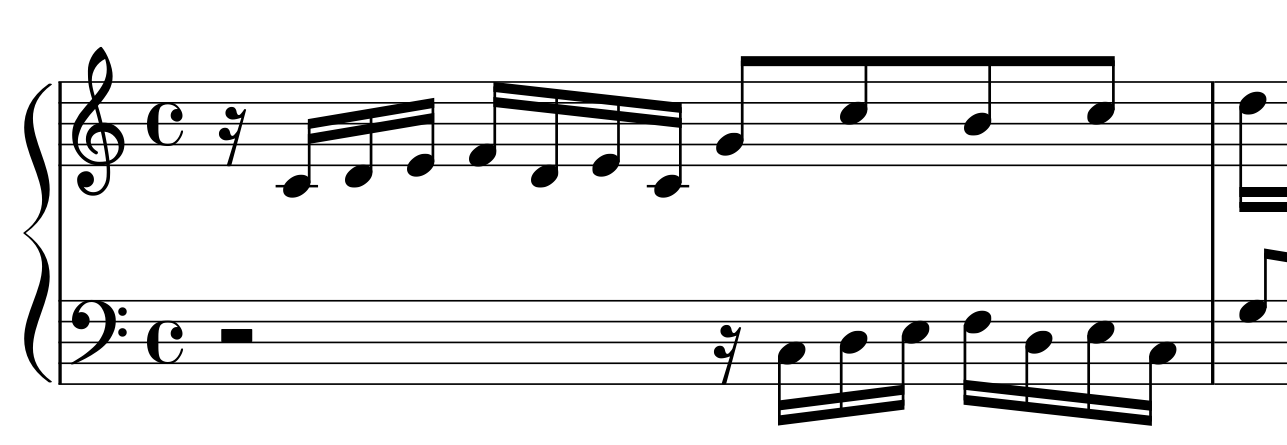
The time signature is 4/4, so let’s say a quarter note is one beat. This isn’t a final decision, and my aim is to remain as flexible as possible. But, let’s go with it for now.
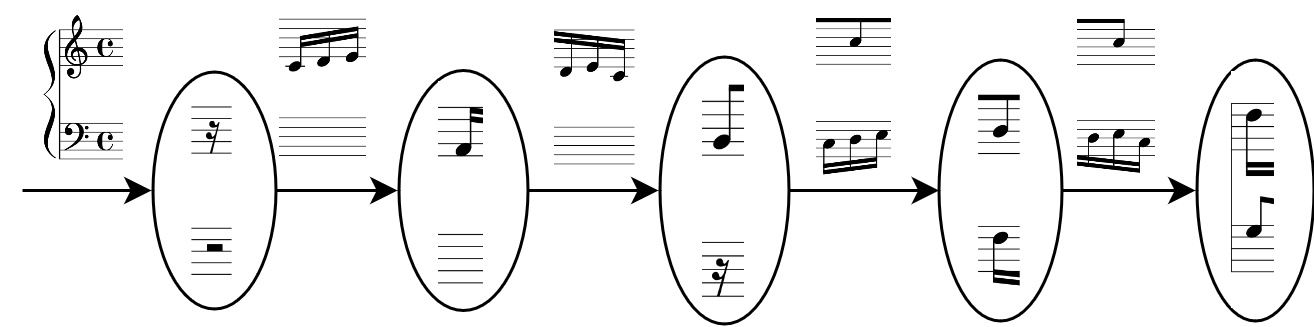
Let me take that first measure (plus the downbeat of the next), and really visualize those 5 beats.
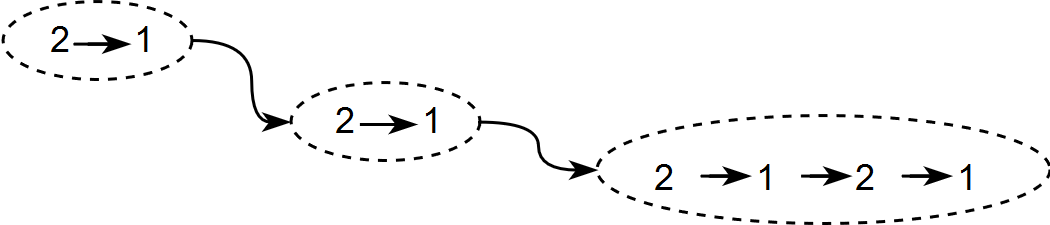
I have circled the notes that fall on the beats, and connected them with arrows showing the notes that lead into the beats. Each beat, therefore, consists of these two parts. By doing this, I can conceive of this measure of consisting of 10 actions, one leading into the next.
Just looking at the quarter note beats:
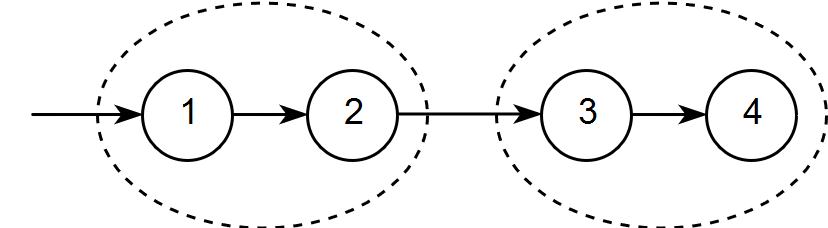
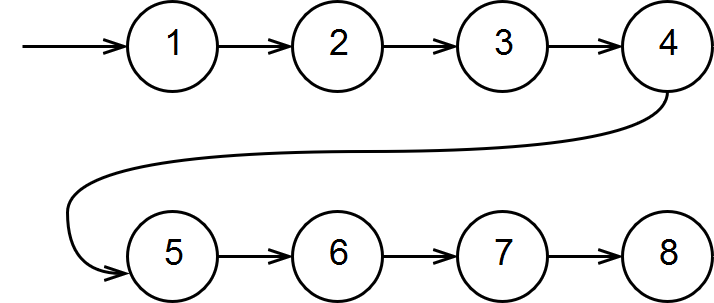
If I number the beats, we can simplify the visual representation even further.
This is one measure of music, plus the downbeat of the next. This is, in some sense, what I see in my mind’s eye when I hear one measure of this piece. It’s a complete object, something I can touch and manipulate. My understanding of the music is based on arranging these simple objects in the order in which I want them to be, and on clarifying the relationships between them. It’s not about sound. The sound is only an expression of this basic structure.
The diagram is only an illustration. The actual music is more complex than this, even in my mind. But, it will serve to demonstrate some points.
Half note beats:
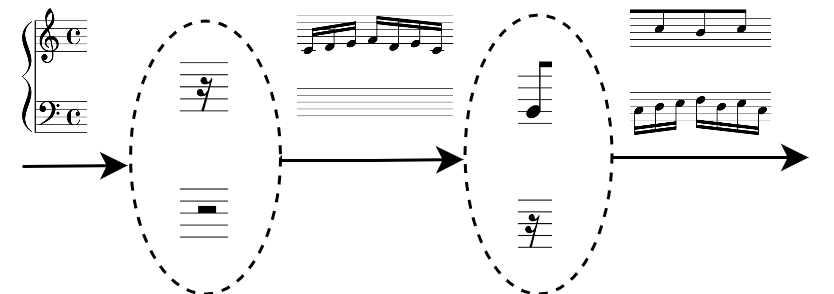
Now, suppose we wanted to consider the half note as one beat. Grouping every two quarter notes together, the diagram might look something like this:
This basic abstract figure could be made more concrete by putting the music notation back in place:
And it can be made even more abstract by removing the quarter note beats entirely:
Eighth note beats:
Given that I am trying to be flexible with the beat, I’d also like to try playing with the eighth note as the beat, and the sixteenth note. The measure, represented as eighth notes, might look something like this:
The video below demonstrates several of these possibilities.
Depending on your purposes, any of these could already be an acceptable rendition of the piece. If you cannot play correct notes in tempo at this stage, it is vital that you work that out before going further. All other stages of analysis and interpretation of music depend on the fact that you have a clear concept of where the beats lie.
Important point:
I want to made a point regarding the selection of which note value gets the beat. I don’t believe there’s is any right or wrong here. I’m experimenting to see what I prefer. It is not essential that you try each and every one of these options. If you know what you want, just go for it. I’m trying all of these because I enjoy the creative process, and the hunt for new possibilities.
3. Look for cadences and phrases.
A next step may be to look for phrases, which are a larger unit than the beat or measure. Often, the easiest way to find phrases is to look for cadences, which serve as punctuation marks.
If you have taken a music theory class, you might be worried about misidentifying cadences and phrases. This is the danger in taking music theory classes. In practice, don’t concern yourself with this. Just notice what jumps out at you. If it’s wrong, you can always fix it later.
Example:
In the previous video, you can see that I am able to play all the notes. And you may even say there’s some expression, but that is not my concern. The performance is perfect, as all performances are. If I want more, I can analyze further, and work to incorporate that analysis of the music into my playing.
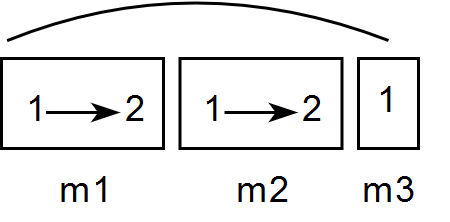
I notice cadences in measures 3, 7, 15, and 22. Let’s look at the phrases ending on measures 3 and 7. We could diagram them as follows.
Since the half note is the beat, each measure consists of two half notes, strung together with whatever material Bach has chosen.
Or, perhaps we don’t even want to consider the content of each measure, but simply observe how they flow together to create a whole phrase. Do you see how each phrase is a single object? How the measures are objects? How they are connected together?
I demonstrate some of this in the video. My task is to get a sense of the phrases as structures. I’m not trying to express anything. I am only trying to play with them, like a child playing with clay.
4. Untangle the counterpoint.
A study of Bach would not be complete without some mention of counterpoint. This could have been done earlier, but it doesn’t really matter. Counterpoint is complex, and requires immense focus to execute properly.
Don’t worry about understanding everything. Label what you observe. Notice how things fit together. Over time, your internal concept of the piece will crystalize. You are building a structure which has both simplicity of form, and also richness of detail. This doesn’t happen overnight, but as it happens, it becomes part of you.
Example:
Motives
First, I will look for motives: small fragments of melody that have their own integrity, often repeated throughout the piece. I’m not concerned about finding each one, just enough to keep me interested. Let me repeat myself in saying that I am not really looking hard for anything, but rather categorizing the features of the music that have already jumped out at me. This isn’t a music theory term paper.
In the first measure, I see two motives. Perhaps we could call them a “subject” and a “countersubject.” Or we could call them “Tom” and “Sue.” It’s totally immaterial, because these are only labels, and what I am really concerned with is seeing them as objects, anyway.
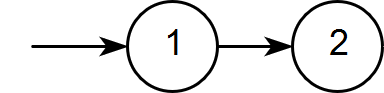
The first motive is two beats. Thus, we could diagram it simply as two beats:
This is a complete picture of the motive. What I play is not one note followed by the next, but rather one beat followed by the next. This is the structure which will be used to express my emotional reaction to the music.
Likewise, the second motive looks quite similar:
Imitation
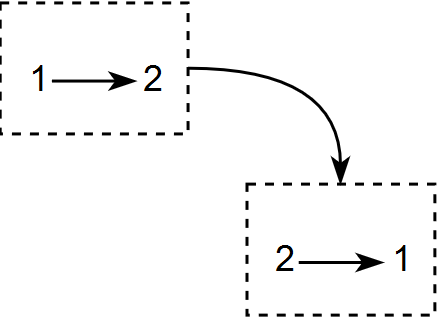
I also notice a couple instances of imitation.
I could diagram them as follows:
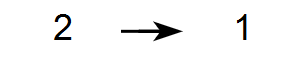
Do you see how “imitation” is simply one thing followed by another? First, you do the first thing. Then, you do the second, in response.
Sequences
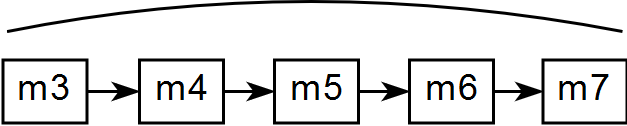
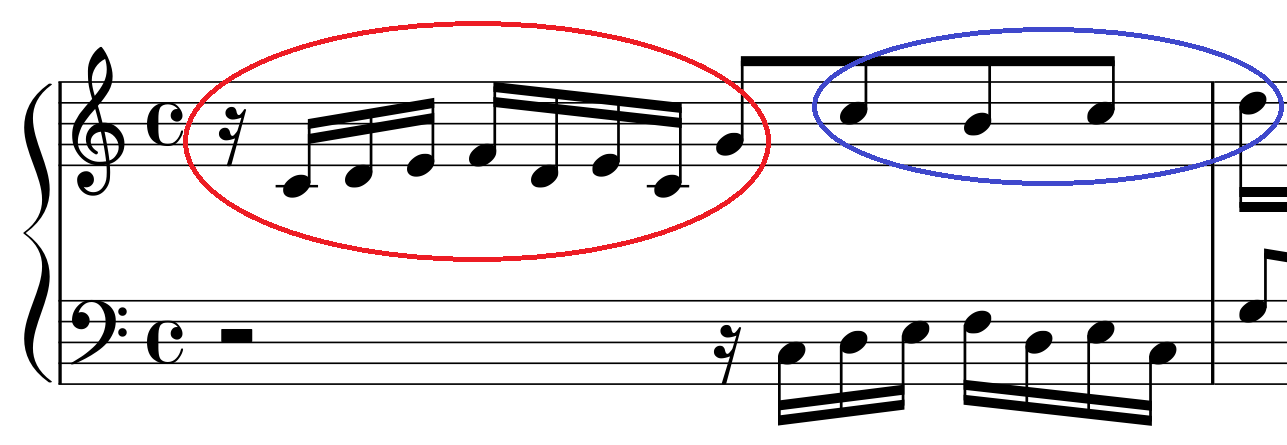
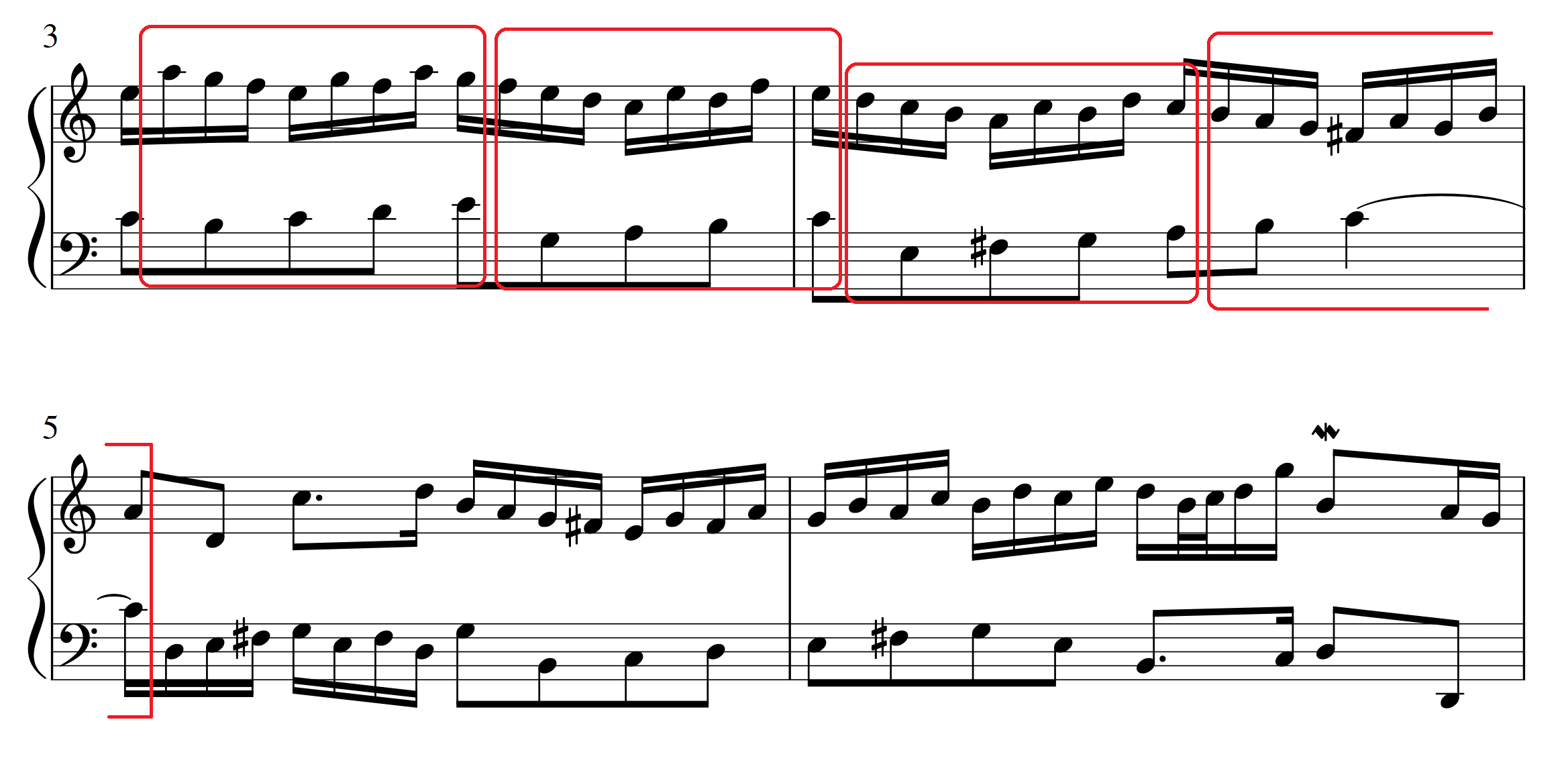
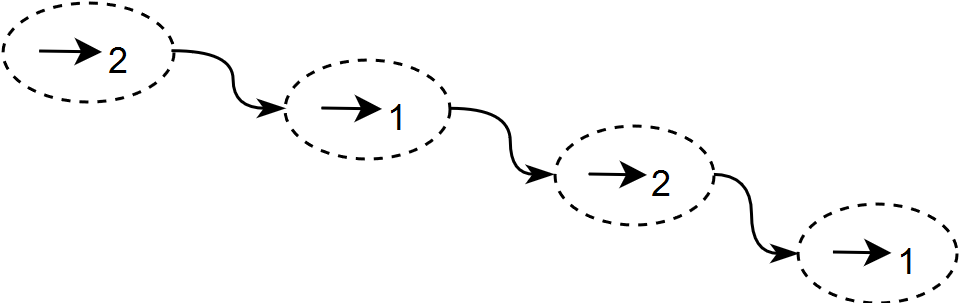
Sequences are rather similar. They are chains of events. Starting at measure 3, we see one, with each event outlined in red.
Thinking of the sequence as a chain of beat-structures, we could diagram it like this:
Starting at measure 9 is another sequence, which I have chosen to diagram as follows.
At the risk of repeating myself, there is no right or wrong here. I must emphasize that this is not intended to be a scholarly analysis of Bach’s music, but rather an explanation of how I saw it, in the moment that I made these diagrams and wrote this text.
Implied Voices
Finally, the very end of the piece has some interesting implied voices I want to bring out. This is a 2-part invention, but I see four voices at the end. In truth, Bach’s 2-part music always has more than two voices, and if I go hunting, I’ll find more. This must also be understood in terms of beats, and the video illustrates how I do this. I want to point out that working this way completely eliminates any need to struggle with finger independence when playing Bach. You will develop complete and total control over all voices, limited only by your imagination.
5. Map out the harmony.
My whole strategy is to start observing basic elements, and gradually look for refinements as I feel the need. In essence, I am only categorizing what I observe. Let me repeat that there is no right or wrong.
Let’s look deeper into harmony. Ideally, I would have an understanding of every single symbol on the page, and an understanding of every relationship between every symbol on the page. That’s a lot of information to process. We can start digging deeper by looking at accidentals, and getting a sense about why Bach wrote them. I go through each one, come up with a rationale, and play that passage, observing how it impacts the music.
Example:
My rationales are quick judgments. If I spent more time on them, they might reveal deeper patterns. It doesn’t really matter. What’s important is that your analysis of the music is convincing to you. If you find that your analysis doesn’t work for some other purpose, you can always change it when you get to that point.
Let’s look at the accidentals, which will expose more interesting patterns in the harmony.
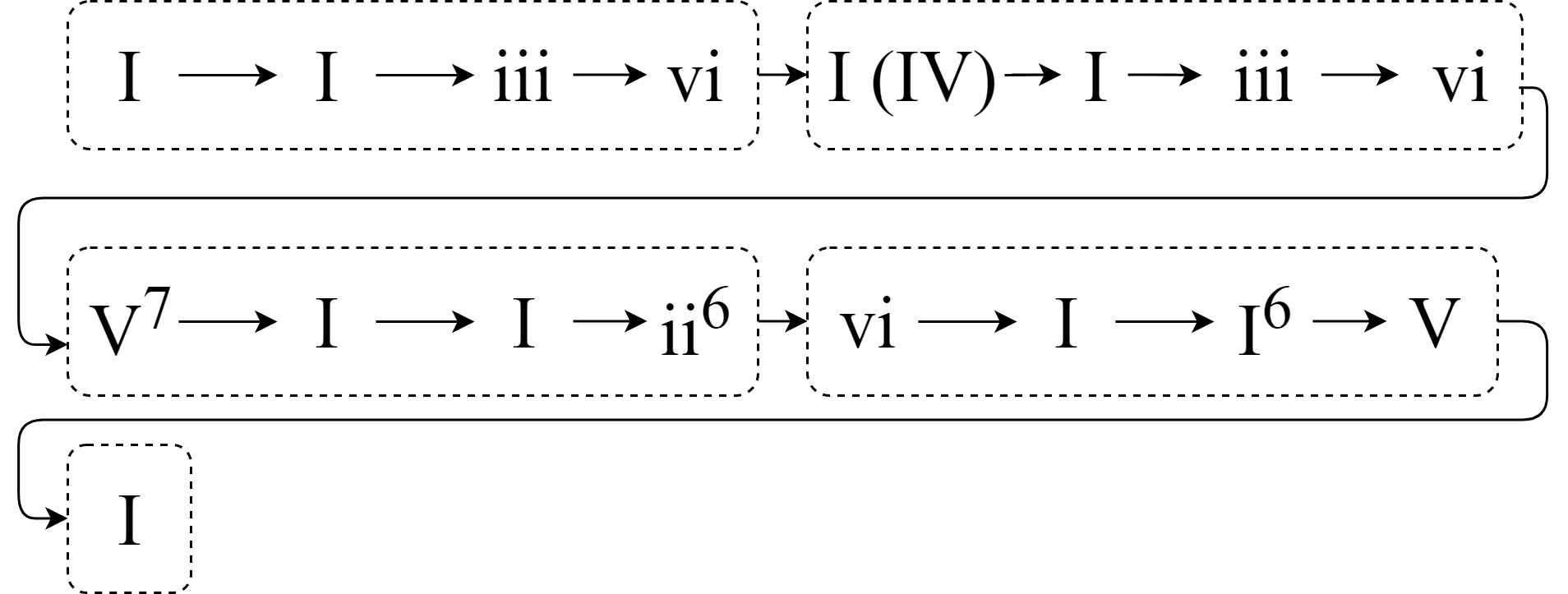
The harmonies are events, and they are regulated by beats, as all musical events are. My task is to see the music this way. If I look at the phrase starting at measure 3, I could diagram it as a sequence of harmonies. I use Roman numerals to designate the harmonies, but the notation is not important. What is important is that this phrase is a sequence of harmonic events, one leading into the next. I want to understand how that is organized, so that it makes sense intuitively.
Examples of harmonic features:
No need to understand these completely, but I wanted to show the types of observations I make when looking at a score:
Measure 4: one F# in the left hand, and another in the right hand, suggesting the key of G. The key is reinforced several times.
Measure 9: the F# returns to an F natural, implying a return to the key of C. Thus, the left hand F resolves to an E in measure 10.
The C# in measure 10 indicates D minor, as does the B-flat. Notice the B-flat leading down to F.
The B natural means we’re back in C major, with a V7 chord here.
Measure 12 has an F# and G# leading to an A, and this, combined with the C natural, suggests A minor.
So, the D in measure 13 is a suspension resolving to the C.
G# in this section is always the leading tone.
Measure 15: the G# reverts to G natural, and the C# means D minor.
The C natural in measure 16 suggests the key of C, and there’s a V7 chord here.
Thus, the F in measure 17 is a suspension, resolving to E in measure 18.
The B-flat in measure 18 is from the key of F, suggesting a new idea here. Note the progression from vi6 to i6 over the next couple measures.
Return to the key of C in measure 20 with the B natural, reinforced by the right hand melody.
Measure 21 starts with the end of a progression ending on I6, quickly returning to the key of F with the B-flat.
The B natural indicates a return to the key of C.
Notice the progression here of IV-V7-I.
Video demonstration
In the video, I play through a couple of these phrases, setting the beat to various note values, so that I can observe the harmonic rhythm on different levels. Again, it’s not about expression, and not about programming muscle memory to play dynamics properly. It’s about observation.
6. Put it all together.
Having done all of this, I play through the piece twice. The video is intended to illustrate how my analytical understanding of the music comes through when I simply sit down and tell myself to play. If it doesn’t come through, chances are I am either not completely focusing on the music, or the ways in which my body expresses my musical ideas are not quite effective enough. These are topics which will have to be dealt with in another article.
Example:
This video is not meant to demonstrate a perfect performance of this piece. My focus here is on the process, not the outcome. If I want a more perfect performance, I would spend more time on this process, clarifying the musical ideas down to the smallest detail, if necessary (actually, I would probably leave that task to a performer who has more patience than I do), and I would spend more time challenging my focus levels, to ensure that I could concentrate on my musical concept no matter what else was going on.
What about…?
There are some aspects of music that I’m not including in my analysis:
Dynamics
I generally do not pay much attention to dynamics in my analysis of the music, unless I can see that the composer made a special point of indicating a specific dynamic marking. Dynamics are perhaps better understood as a feature of harmony. They are usually intimately related to the structure of the phrase, and when you understand the phrase, the dynamics happen automatically. Let yourself respond to the music. Rather than thinking in terms of “loud” and “soft”, it is better to think in terms of “tension”, “resolution”, and “energy”. But don’t plan it out. Understand the mechanics of the phrase, and the dynamics must happen.
Emotions
Your job is not to express emotion. You are expressing emotion, 24 hours a day. Rather, your job is to understand the piece in a way that is coherent, and to stay focused while you perform the piece.
Play the music, not the analysis, and the emotions you experience while you play will come through. You can’t control them, or rely on the fact that they will come back next time. Simply play the music. You will react to it, based on your understanding of what you are reacting to, and the fact that you are a human being who responds to music. Your technical practice must be mechanical. Do not let emotion interfere with it.
Two types of piano players:
Players fall into one of two extremes here. Either they are too technical, or they are too emotional. Many teachers don’t understand the difference. Players who are too emotional have allowed their emotions to influence their practicing in a way that doesn’t work during performance. Often, they can play well when they are in a room alone, but onstage they experience so much anxiety that nothing works. Their playing may seem uninvolved, because they aren’t correctly executing the musical ideas, but really the problem is that they are too involved.
Technical players have the opposite problem. Playing is too easy for them, and thus they can perform difficult works without having to understand the music. What they are lacking is analysis, and this is why their playing doesn’t sound like music.
Players can have both problems simultaneously. For example, it is possible to have severe stage fright, and also not understand the music you are playing.
Don’t let either of these stop you from practicing technically, or from investing in the moment. You need to understand the music mechanically, devoid of emotion, so that you are free to put true emotion into it in the moment of performance. It must be easy to play, so that you can react to it as an observer.
Many teachers even encourage always practicing with extreme emotion, as it aids in memory. It does indeed aid in memory, and for this reason I believe it’s a mistake. The problem is that in a performance, you may not be in control of your emotions, and if a given emotional state is required to recall something from memory, you may be out of luck.
Your turn
I hope you can see that my method of analysis always aims to be exceedingly simple, based only on the music. It does not require an extensive background in music theory, although the more knowledge you have, the better. Instead, it relies only on breaking the music down into the simplest possible pieces, and structuring them in a way that makes sense to you. When you perform, you will be delivering an interpretation that is uniquely yours, and thus hopefully satisfying to you. If you see less than I do, ignore the parts you don’t see. Maybe I’m imagining them, anyway!
Do not hold yourself accountable for that which you do not see. My analysis of this music was done in a matter of minutes. If you want to spend hours, or weeks on it, go ahead. You will possibly see more than I saw, and your performance will reflect that. But, don’t insist you are playing it wrong because you just know there’s something you aren’t seeing, even if you can’t put your finger on what exactly it is. Make a decision, and play it. Your performance is always perfect, in that it is a direct result of both your current level of understanding, and exactly what you are doing in the moment.
Wouldn’t it be great if you never had to worry about making mistakes while playing the piano? Memory slips, wrong notes, and many other hazards constantly plague pianists, but there are solutions to these problems if you are willing to adopt a flexible mindset.
In this article, I will list several reasons why you are having trouble playing the piano without mistakes, and what to do about them.
And, I will show you why sometimes the best thing to do is nothing at all.
Let me stop right here, and make something very clear:
I DON’T CARE ABOUT YOUR MISTAKES!
You are a human being, and human beings make mistakes. There is nothing wrong with that, and nothing that needs to be fixed. The only conversation I will entertain is how to fix mistakes because fixing mistakes is fun, and playing with mistakes is also fun. Got it?
If you disagree, try to remember what it was like being a kid, when mistakes were fun.
Before trying to fix mistakes
First, ask yourself: “am I sure that this is a mistake?”
Sometimes, we assume it’s wrong just because something feels off, or because someone told us it was wrong, or because we’re used to making the mistake in the past.
Second, ask yourself: “am I sure I can fix this?”
If you know exactly how to fix it, great. Just do it, and stop reading here. On the other hand, if you think you know how to fix it, but thefix doesn’t work, then…you don’t knowhow to fix it.
If you don’t know how to fix it, first try to understand why it’s happening.
OK, now let’s get to the list:
1. You don’t understand the music
If you don’t understand the music itself, you are likely to make mistakes while playing the piano. If I asked you to navigate from one end of a foreign city to the other, without a map, how successful would you be?
The Solution:
Make sure you understand the music. That is, analyze the score, and try to understand why it’s written the way it is.
Do you understand how the piece is put together? Could you talk me through it, like a tour guide?
How about the purpose of each note, each chord? Can you tell me where phrases begin and end? Are you following where all the melodies lead? Do you know where the beats are?
2. You don’t understand the movement
Do you know how to move your body the way the music requires?
If so, and it’s still not working, you need to look further into what exactly it is about the relationship between your body and the piano that you are not seeing.
Repeating the wrong thing over and over will not fix it. Only understanding will. (However, repetition is often necessary to let the mind calm down to the point where understanding can present itself.)
The Solution:
Pay attention to any physical problems in your playing. If there are any moments where things feel awkward, tight, tense, or painful, you will have a greater chance of making a mistake. Be ruthless about this.
3. You’re distracted
Human beings are not robots. The mere fact that we told ourselves to complete a task is no guarantee that we will be directed toward that task without interruption. Distractions can come from the external world, in the form of unfamiliar pianos, noise from the audience, movements that catch our eye, etc. And they can come from the internal world as well, in the form of thoughts about our performance, our self-concept, what we had for dinner last night, how much we like this piece, or how much we are worried about the passage coming up, etc.
The Solution:
You need to practice in a way that takes distractions into account. Practice when you are tired or stressed out. Seek out unfamiliar pianos in unfamiliar environments, and practice on them.
4. You don’t practice long-term
If I wished to learn Chinese within the next ten years, I would practice very differently than if I had an upcoming trip to China next week. In the former case, I would immerse myself in the language, listening to spoken dialogue and reading texts that I comprehended very little. Eventually, I would understand more, and within 10 years, given enough practice, I would be fluent in Chinese. In the latter case, however, I would not have time for this, and would instead probably concentrate on memorizing specific phrases that I anticipate needing for my trip.
In music, the same thing happens. Ideally, I want my practicing to be oriented long-term. I want to get things to the point where mistakes simply don’t happen while playing piano because the correct way is completely obvious. In long-term mode, I would not care about a specific performance or a specific mistake.
However, if I need to learn a piece by next week, my priorities would change. In short-term mode, I would be more interested in fixing specific mistakes, so that a given performance is successful.
These are two very different ways of practicing. One does not lead to the other. However, it may be worthwhile to develop strategies for each.
The Solution:
In terms of long-term practicing, the following will reduce mistakes over time:
Sight-reading a lot of music.
Listening to a lot of music.
Analyzing a lot of music.
Paying close attention to your performance habits and working on eliminating the harmful ones, and increasing the helpful ones.
Finding an approach to practicing that encourages you to face whatever you are consciously avoiding.
Changing your long-term practice strategies is the only way to figure out how to stop making mistakes on the piano.
5. You don’t practice short-term
When you have a performance coming up, the objective may not be only to “play well”, but also to “avoid playing badly”. This will require hunting down specific mistakes and taking steps to reduce the chances of their occurrence.
The Solution:
Let me stress that I don’t believe piano practice must include this mindset. If you are not performing, is it necessary to spend time fixing mistakes that are of little interest, when that time might be better spent on working through a new piece? I have never “corrected” many of the mistakes I made in pieces I played as a beginner, but I guarantee I would not make those same mistakes again.
That said, if you want to hunt down specific mistakes, try the following strategy:
Play through the piece. Do not stop when you make a mistake.
After you have played the piece, make note of one mistake.
Play again.
If the mistake is still present, great. What we want to do now is zoom in on it.We want to capture it so that we can study it more closely. We could:
Reduce the size of the section you are playing so that it includes just the mistake.
Slow down the tempo to a point where the mistake still occurs but you can understand it better.
The object here is not to eliminate the mistake. It is to find out what we need to do to make the mistake.
If the mistake disappears, try to bring it back. For example, you could:
Increase the tempo.
Expand the section you are playing.
Play for someone else, or record yourself.
If you aren’t sure if there was a mistake while playing the piano, assume there wasn’t. Always focus on that which you do see.
6. You think you fixed your mistake
The truth is, the mistake will never go away. Under the right conditions, it will come back. Your job is not to eliminate it, but rather to understand it so that you know exactly which conditions will cause it, and can adjust accordingly. Many pianists get frustrated when a mistake they had believed to have been eradicated suddenly reappears. If this happens, understand that it only means you don’t fully grasp the situation, not that you did anything “wrong”.
Then, when you play, adopt the attitude that mistakes are part of the experience of playing piano. They are not a sign of a problem. Do not stop.
When you work on fixing the mistake, do not be so eager to mark it as “done”. Understand that it is likely to return. Stress-test your fixes. If you can play correctly at a slow tempo, play faster. Try to prove to yourself that the mistake is still there, not that it’s gone.
7. You think you understand the mistake and don’t need to fix it
If you don’t understand the music itself, you are likely to make mistakes while playing the piano. If I asked you to navigate from one end of a foreign city to the other, without a map, how successful would you be?
The Solution:
You may think you understand the mistake and move on prematurely. You may recall your teacher saying “play that note with your 4th finger”, and assume that because you didn’t use your 4th finger, you “get” why the mistake happened. But, do you understand why you didn’t use the 4th finger? Is your teacher even right about this?
Stick around and watch the mistake until you see what’s going on. Only then will you have a chance at correcting it naturally. If you are relying on mental rules to tell you what to do, you don’t get it yet. It’s like reaching out for a glass of water. You don’t need to recall a teacher’s advice to know how far to reach. If it is not automatic, it’s not yet a part of you.
8. You’re spending too much time trying to fix the mistake
You may wonder: how will mistakes be corrected if I don’t correct them?
True, if you don’t take the time to identify each of your mistakes and understand its cause, it will never be corrected.
On the other hand, if you correct your mistakes, you will be constantly chasing yourself in circles, and never build a strong foundation upon which to base anything.
This is a paradox.
The way to resolve it is to commit to doing one thing at a time, observe the results dispassionately, and adjust your course as needed, based only on results, and not on your level of worry.
“To play a wrong note is insignificant; to play without passion is inexcusable.”
Ludwig van Beethoven
Ferdinand Ries, a student of Beethoven’s, tells a story about how the master prioritized mistakes:
“When I left out something in a passage, a note or a skip, which in many cases he wished to have specially emphasized, or struck a wrong key, he seldom said anything; yet when I was at fault with regard to the expression, the crescendi or matters of that kind, or in the character of the piece, he would grow angry. Mistakes of the other kind, he said, were due to chance; but these last resulted from want of knowledge, feeling, or attention. He himself often made mistakes of the first kind, even when playing in public.”
The Solution:
You may try to correct the mistake. Do not try to correct it. Simply observe it. Get to know it in its natural habitat. If it doesn’t disappear, you probably haven’t gotten to know it well enough!
“Are you saying I should just ignore my mistakes?”
No, I’m saying you should work on one thing at a time. By all means, notice them. Write them down. But when you practice, work on one thing at a time.
Some of those mistakes will be fixed simply by noticing them. Some, you will not know how to fix anytime soon.
“If I keep hitting wrong notes on the piano, won’t it become impossible to eliminate them?”
I will say a few things in response to this:
Do not worry about this problem. Worry only about understanding the mistake, not about eliminating it.
If you don’t know exactly how to fix the mistake, you are already repeating whatever behaviors led to the mistake in the first place. Those behaviors may even be present in everything you play, whether the notes are right or wrong.
Do you know why you are making the mistake? Do you know what reward you are getting from it? We don’t do things simply because we have repeated them, but rather because those things have been reinforced. Habits can be learned in a single repetition.
As I mentioned above, you will never eliminate it from your brain. Your only hope is to build something new.
This may be something you have done thousands of times in the past. A few more will not make a difference.
Do not worry about this problem. Worry only about understanding the mistake, not about eliminating it.
9. You don’t want to fix the mistake
You may not truly attempt to bring the mistake back. It is natural not to want mistakes to occur, and to try to prevent them. This may, however, get in your way. I’m serious when I say you should try to bring the mistakes back. When you increase the tempo, don’t do it by one click. Double the tempo. If you play from memory, don’t stop when you aren’t sure of the next note. Let your hands play and watch what they do.
The Solution:
Many pianists will tell me: “What you are saying is obvious. Of course, you shouldn’t fixate on mistakes, but merely take steps to correct them. Why make a big deal out of this?”
This may seem obvious, but watching the way most musicians practice, you would never know it. We obsess over our mistakes in many subtle ways, and we continue to repeat strategies that have no hope of working.
As a result, fixing mistakes is simply not fun, and musicians try to avoid noticing mistakes because they don’t want to have to get dragged into trying to fix them.
Everyone does this. This is why I place so much emphasis on learning how to let go of things. When we are free of these traps, we have much more energy and time left over to pursue what we are actually interested in doing.
When fixing mistakes is approached from a place of playful curiosity, we have a much better chance of being successful, and of enjoying the process.
10. Your expectations about mistakes at the piano are too high
The danger in practicing for short-term performance is that we often tend to fixate on mistakes that we cannot possibly fix within the given time-frame. Thus, it is thus crucial to set realistic expectations. If instead of correcting mistakes, we can often increase our chances of success in other ways.
These options are often available to you, and often they are not. For example, you may not have control over what piece you are permitted to play, or how well you sleep, or how much time you have to practice. Always, it is better to focus on what you have control over and accept what you don’t.
The Solution:
Instead of trying to fix your mistakes, try some of the following options:
Play a piece that is easy enough that you are likely to play without mistakes.
Simplify the piece to the point where it is easier to play correctly.
Learn how to make peace with any mistakes that you make during the performance, and the fact that you are a fallible human being.
Reduce factors that are likely to lead to mistakes (get a good night’s sleep, spend time on the piano you will be performing on).
Refuse to play altogether.
11. You’re trying to do something else entirely
Many pianists assume that if a mistake occurs, it must be “corrected” immediately. There are, however, dangers in “correcting mistakes”.
It’s hard to fix things when you aren’t OK with them first. Work on accepting mistakes. Make friends with them and see them for what they are. Then, when you get to know them, you can decide if you want to keep them around.
The Solution:
It is natural not to want mistakes to occur, and to try to prevent them. This may, however, get in your way. I’m serious when I say you should try to bring the mistakes back. For example, when you increase the tempo, don’t do it by one click. Double the tempo. Or, if you play from memory, don’t stop when you aren’t sure of the next note. Instead, let your hands play and watch what they do.
Don’t change course too quickly.
Is playing piano without mistakes even a worthwhile goal?
That’s for you to decide. Let me ask a few questions:
Why play the piano?
Why correct mistakes?
Why play well?
Why not play badly?
Can you enjoy playing the piano if you are making mistakes?
Ask yourself these questions and see what your mind tells you.
Many beginners wonder if professional pianists make mistakes. Of course, they do…all pianists make mistakes. That’s just part of being human. So, is the goal of completely eliminating mistakes even possible?