STATUS: INACTIVE // READ-ONLY

Blog

  • #46 – Piano in the 4th Dimension

    #46 – Piano in the 4th Dimension

    Self-Defined Human
    Self-Defined Human
    #46 – Piano in the 4th Dimension
    Loading
    /

    Welcome to 4-dimensional space. Glad you could join me on this higher plane of existence. Now, let me set the record straight about some of y’all’s problems with me.

    (Piano Time Live on Instagram, April 21, 2023)

    Timeline:

    0:00 – Introduction
    1:39 – Golden Hour
    5:48 – 3-step exercise to play with both hands
    10:51 – The 4th dimension
    19:18 – Für Elise
    22:26 – Moonlight Sonata
    24:59 – The Empowerment Dynamic and the Drama Triangle
    28:56 – Jordan Peterson is awesome
    31:49 – Nerds who correct “misinformation” on social media
    34:19 – Osho, Wild Wild Country

  • Rules for Comments

    I want my comment section to be fun for you to read and fun for me to reply to. I want it to be a world where communication happens the way I want it to happen.

    This isn’t a democracy and I’m not an authority figure. I’m just another human being like you. But this is my channel and I’m running it according to my chosen values (”turquoise” in spiral dynamics).

    If you’ve listened to episode 2 of my podcast (“Stop Setting Boundaries“), you know that boundaries are rules we impose on our own behavior, not on that of others. So, as an exercise in setting boundaries, I’m imposing this comment policy on myself.

    The Policy

    I will delete comments that consist of:

    • Criticism from an account that doesn’t show a (real) full name and photo
    • Trolling (making up bullshit just to stir the pot)
    • Correcting me without stating and standing behind a worldview
    • Anything that makes me want to reply “so what???”
    • Explaining what you think other commenters meant
    • Emojis without words
    • Gibberish
    • Quoting memes without adding anything original
    • Ellipses at the beginning or end of sentences
    • Referring to me in the third person (“bro thinks…”, “Him:…”, etc)
    • Referring to my audience as “us” or “we”
    • Warning me that my actions are going to cause me to lose my audience
    • Using “genuinely curious”, “genuinely interested”, “genuinely wondering”, etc.
    • Calling me childish or immature
    • Derogatory statements or questions about my mental health
    • Telling me to chill or relax, etc.
    • Calling me a troll or asking if I’m a troll
    • Sealioning (criticism disguised as innocent questioning)
    • Dogpiling (joining in on any criticism of me that has already been established by others)
    • Accusing me of spreading misinformation or being misleading
    • Demanding that I stop producing content or writing comments or anything else

    Some of these are open to interpretation, and I’m the final judge. That’s the whole point. These aren’t rules for my commenters, but rules for me (listen to the podcast episode about boundaries).

    I want to make it clear that the above comments aren’t “bad” in every context. But, in the context of my comment section, I don’t want them. They don’t lead to the kind of bingeworthy reading material I want, and they make it hard for me to write the kind of replies I want to write. I’m aiming for quality over quantity.

    I’m still trying to figure this out, so these rules may change at any moment.

    Please let me know if anything is unclear.

  • How to Play with Two Hands at the Same Time

    First, it’s normal to have trouble with this. Patting your head and rubbing your stomach at the same time screws up nearly everyone.

    Piano’s the same. Playing each hand on its own works fine. But, when you try to put them together, all hell breaks loose. Your left hand wants to do what your right hand is doing, or vice versa.

    It’s like none of the work you did with each hand on its own counts for anything.

    That’s because there’s a huge gap in difficulty between two of the steps:

    1. Play left hand by itself. (easy enough)
    2. Play right hand by itself. (easy enough)
    3. Play both hands together. (omg wtf!!!)

    When you do it this way, there’s no smooth progression.

    It’s as if you go from kindergarten to 1st grade and then skip directly to university. It would be a shock to your system and you’d fail.

    Not that you’re genetically incapable of succeeding at university. You’re just incapable right now, because you haven’t gone through the steps leading up to it.

    You skipped steps, so there was a difficulty gap that overwhelmed you.

    That’s why you can’t learn a piano song in three steps like that.

    You’re skipping way too much.

    The way to fix this is to add steps in between 2 and 3 that will make it into a smooth climb. But, those in-between steps are far from obvious.

    For example, take the song “Golden Hour” by JVKE:

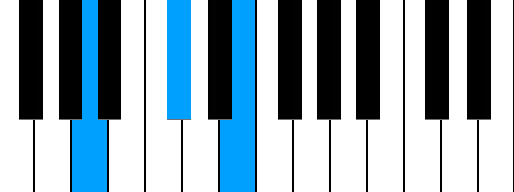
    Your left hand plays these notes.
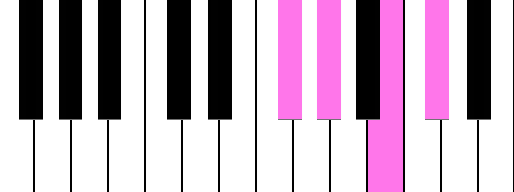
    Your right hand plays these notes.

    But, how do you play them at the same time?

    You can’t just throw them together and pray for the best. You’re skipping steps if you do it that way.

    There’d be a huge difficulty gap.

    You’ve got to break it down into more than three steps.

    You need to be patient. It’s not possible to jump immediately to playing both hands together the way you want to. You’ve gotta go through 2nd-12th grades before you can enter university.

    Are you on board with that?

    Your next step won’t feel like university.

    It won’t be impressive. But, it’ll be easy enough that you can do it. Then, we’ll go to the step after that, and the next, and so on, until we get to the final destination.

    So, without further ado, here’s the next step:

    Play both hands together, but play one note at a time.

    Words can only explain so much.

    It’s easier to see it in a video:

  • #45 – Piano NERDS, Bach & Wrong Notes (with guest Dr. David Servias)

    #45 – Piano NERDS, Bach & Wrong Notes (with guest Dr. David Servias)

    Self-Defined Human
    Self-Defined Human
    #45 – Piano NERDS, Bach & Wrong Notes (with guest Dr. David Servias)


    Loading


    /

    I invited Dr. David Servias to have a conversation with me about the Bach Toccata & Fugue fiasco. We discuss the history of the piece, why the NERDS can’t process one out-of-place note, and how I’m dealing with hate on my YouTube channel.

    For the backstory, watch the original video (and read the comments 🤦‍♂️)

    Thanks for listening.

    If you have not taken my course Learn Piano in 5 Days yet, that would be a good starting place for you. You can access it for $5.00 here: https://michaelkorman.com/learn-piano-in-5-days/

    Or, if you’d like to work with me 1-1 (online), you can sign up for the Intensive Song Study: https://michaelkorman.com/intensive-song-study/

    Both of these are for beginners. No experience needed. Just willingness to try new things.

    Timeline:

    00:00:00 – I posted a cute little piano tutorial and the music theory NERDS freaked out.

    00:02:39 – Bringing Dr. Servias on to help settle the debate.

    00:04:22 – The list of accusations against me. Responding “appropriately.” Two kinds of nerds.

    00:05:57 – David explains the controversy. What’s the Toccata and Fugue? What did I play? What were they expecting me to play?

    00:11:32 – Does any of this matter? What would Bach have said? Would you have to follow his orders?

    00:13:56 – The history of the Toccata & Fugue in D minor. Why’s this such a big deal? There’s no manuscript. Disney’s Fantasia.

    00:26:09 – My pinned comment. Are they lying? Evolution vs. creation.

    00:36:21 – How do I respond to all this? Your mom jokes. Credibility.

    00:39:17 – The time a hater quoted MY OWN TEACHER to prove me wrong. Urtext editions. Was Glenn Gould a troll?

    00:49:17 – Why I used “your mom” jokes to reply to comments. Are mom jokes insults? Using offense as a weapon.

    00:53:24 – Doubling down. Agreeing with the haters. Making fun of yourself first. Taking the wind out of their sails. Trying all the different approaches.

    00:55:43 – My videos are for adults, not kids. But I’m not making this an 18+ channel to protect the kids. Sorry.

    00:56:26 – Is it wrong to delete comments? It rubs them the wrong way. Free speech. But you’re all guests at my party. Why I hate inclusivity. Facebook groups that have rules about respecting everyone’s opinions are a mess.

    01:01:01 – They can make their own videos and talk about anything they want. Even trash-talking me.

    01:08:23 – Why I’m not going to prove I have a master’s degree. Negotiating with terrorists. I’m not good at piano but I’m better than all of you.

    01:09:50 – They don’t like my personality. How I don’t conform. They’re envious. They want respect and view it as a scarce resource.These people hate children. Generational trauma.

    01:13:20 – “Bro pinned his own comment!”, “Bro wrote a WHOLE ESSAY!”. Artists vs. graffiti vandals. “You’re just doing it for views!”

    01:15:47 – Am I a “troll”? There are two kinds of trolls. The word is ambiguous. I’m a “classical troll.” Trolls vs. haters. “Piece” vs. “song”. HTML the “programming language”. I’m going to keep trying to rock the boat. Paris Hilton. Howard Stern. Amy’s Baking Company.

  • How Long Does It Take To Learn Piano?

    I got an email someone who’s wondering how long it will take to learn piano. I get this question a lot and I’m sure it makes sense in the head of whoever’s asking it. But, I’ve been playing the piano for decades and I’m still not good at it. So, what hope do you have?

    The way to turn this into a useful question is to ask “how long will take to learn [specific song]?”

    That’s easy to answer.

    (The email is in a bold italic font, and my responses are in a regular font.)

    “Hi Michael, I’m just getting started with piano and I was wondering if you had any thoughts on how long it will take?”

    Welcome to piano. I hope you enjoy the ride.

    Oh, wait. I see you’re already wondering when they’ll let you off the ride. What’s the rush?

    Half of me wants to give you a bullshit “spiritual” answer and admonish you for not enjoying the journey. But, that wouldn’t be helpful. You want results and you want them now.

    I can’t blame you for wanting results. Why else would you invest time into something if you didn’t have an expectation it would pay off?

    So instead, I’ll blame you for not asking about specific results. You asked “how long will it take?” What’s “it”?

    “I know you’ll tell me to be patient,…”

    No, I’m not going to tell you to be patient. I’m going to tell you to set a timer and work on the damn exercises until the timer goes off. It doesn’t matter if you’re patient or not.

    You didn’t say in your email what results you want. If you had, I’d be able to give you specific exercises to get those results.

    “…but I just want to know how long before I’m at a reasonably ‘decent’ level?”

    Again, you haven’t defined “reasonably decent level.” So, I’m going to define it for you: A “reasonably decent pianist” is someone who can play River Flows in You by Yiruma.

    Now, as to the question of time. I broke this song down into 45 exercises. If you spend one day on each exercise, you’ll be able to play the whole thing in 45 days.

    Unfortunately for you, I haven’t published all 45. But, I’ve got the first 5 up on TikTok, Instagram, and YouTube. So, what you should do is watch those videos and learn the exercises. Do them one at a time and master them.

    I don’t know yet what I’ll do about the other 40. Maybe I’ll publish them like I did with first 5. Maybe I’ll charge money for them. Maybe I’ll do nothing at all. If you want leverage over this decision, you’ll learn the first 5 and send me a video.

    Thanks for your email,
    Michael

    If you have a question you’d like me to consider answering in a future article, you can send it (3-4 paragraphs/500 words max) to this email address: questions@michaelkorman.com.

  • Worried About Starting Piano Lessons

    My way of teaching piano uses mindfulness. You might not know that because I haven’t used that word much lately. That’s because it has connotations I’m trying to avoid. But, I got an email from someone who’s interested in mindfulness. So, let’s talk about it.

    (The email is in a bold italic font, and my responses are in a regular font.)

    “Hi Michael! I read your page about mindfulness for musicians. I think it’s great because we need more mindfulness in the world.”

    There’s a blast from the past. That article was among was first I wrote after I decided to make mindfulness the core of my piano teaching. Now that you mention it, I’m going to have to go back and clean it up. I haven’t changed my mind on anything, but I’d use different language today.

    But still, I’m glad you’re inspired by it. We do need more mindfulness in the world.

    Hold on, let me pause here because the word “mindfulness” has connotations that I’ve got to address.

    Take a stroll through the Mindfulness section of the bookstore. You’ll see books about relaxation, aromatherapy, self-esteem, as well as something called “adult coloring books.”

    None of that is what I’m talking about when I use the word “mindfulness.”

    Real mindfulness is deep training for your mind.

    “I’m not sure if I qualify as a musician or not. I took piano lessons when I was a kid but I barely remember any of it.”

    I’m not sure I qualify as a musician either (that’s why I sometimes use the term “KorMusic” for what I do).

    Let me be more straightforward. As far as I’m concerned, you’re a musician if you make the decision to call yourself a musician. You don’t need a license.

    “Now, I’m 35 and I want to get back into it.”

    No time like the present.

    “I also meditate and found that it’s helped me with my anxiety. I remember piano lessons being very stressful and I’m worried that will happen again.”

    My guess is you were taking piano lessons against your will.

    As an adult, you’re now free to come and go as you please. But, if you’re like most adults who’ve been traumatized by school, you still act like a child. Don’t worry, it’s not the end of the world. But, it will hold you back until you fix it.

    Learning piano should be stressful. Your mind’s job is to conserve energy, to maintain the status quo. That means keeping you in your comfort zone. Stress happens when you leave your comfort zone. To learn a new skill, you must leave your comfort zone.

    Stress is unavoidable, so don’t try to avoid it. Instead, face it head-on and use it to help you learn.

    The solution is the same whether you’re learning on your own or with a teacher. What you’ve got to do is get clear on what exercises you’re using to train yourself with. Then, do those exercises (even if they’re stressful). The exercises will teach you.

    (If you want to work with me 1-1 online, I have a great deal right now.)

    “I like how you say it’s important to be nonjudgmental. Do you have any tips about how I can avoid judging myself as I get back into piano? Thank you.”

    At this point, you can’t avoid judging yourself. Your mind has been trained from a young age to judge, so don’t fight it. Let it happen and keep doing the exercises.

    Thanks for your email,
    Michael

    If you have a question you’d like me to consider answering in a future article, you can send it (3-4 paragraphs/500 words max) to this email address: questions@michaelkorman.com.

>